
A healthy diet probably doesn't slow biological ageing in the strict sense, but it does cut the risk of the chronic conditions that make ageing harder — heart disease, type 2 diabetes, some cancers and dementia. The strongest evidence is for eating patterns rich in plants, with plenty of polyphenols and oily fish. Below we look at what the research shows.
What happens when we get old?
Other than a few wrinkles appearing there are lots of biological changes. Some of the changes that occur are the dysregulation of the immune system and increased inflammatory responses. Increased inflammatory responses leads to a higher incidence of chronic diseases such atherosclerosis (buildup of fats, cholesterol and other substances in and on your artery walls), cancer and Alzheimer’s.
If an elderly person is also obese the risk of developing these diseases is increased. Aging and obesity are associated with many of the same immune and inflammatory diseases, for example heart disease, diabetes II, infection, cancer, arthritis and neurological disease.
Increased inflammatory responses lead to a higher incidence of chronic diseases such as atherosclerosis, cancer and Alzheimer’s.
As the risk of certain diseases increase as we age, how do we slow aging or promote healthy aging.
How can we slow aging?
The real question should be how can we reduce the inflammation and cell mediated immunity through diet?
Research in this area is still on going but two of the most promising methods to slow aging or promote healthy aging are increasing the amount of fruit and vegetables you eat and polyphenols (a type of antioxidant).
Does increasing the amount of fruits and vegetables in your diet slow aging?
- Epidemiological studies have suggested that an increased consumption of fruits and vegetables is associated with the reduced risk of obesity and age-related diseases. It may also contribute to longevity (slowing biological aging).
- This may occur due to increased antioxidants and changing the diversity and composition of the gut. However, this claim needs more research.
What have polyphenols got to do with ageing?
- One of the causes of aging is DNA damage, which can be caused by environmental factors such as UV and by biochemical activity in the body. This DNA damage is sometimes caused by the production of reactive oxidised species.
- Polyphenols are the most abundant antioxidants in the diet and one of the main roles of antioxidants is to neutralise reactive oxidised species. See our article on antioxidants to understand more.
- Some good sources of polyphenols are dark chocolate, berries, beans, nuts, vegetables and soy.
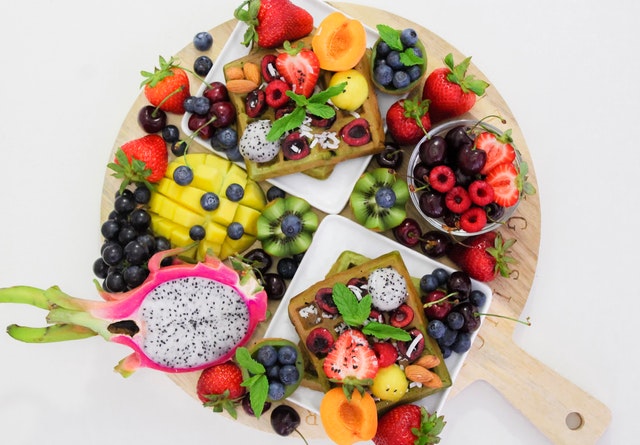
Good sources of polyphenols are dark chocolate, berries, beans, nuts, vegetables and soy.
- Studies have also shown that polyphenols can reduce the risk of dementia and Alzheimer’s.
Other suggested mechanisms being researched to slow aging involve:
- Micronutrients such as vitamin E, vitamin B6, folate and iron.
- Lipids such as fish oil.
- A healthy balanced diet.
Conclusion
To conclude consuming more fruits and vegetables as part of a healthy balanced diet together with physical activity appears to reduce the risk of developing chronic disease in older people and promote healthy aging. Although a healthy diet may not slow ageing it would reduce the risk of developing chronic diseases. More research to support these initial studies would be beneficial.
Studies discussed in the article:
Polyphenols and Aging
Brannon L. Queen and Trygve O. Tollefsbol
Link- https://www.ncbi.nlm.nih.gov/pmc/articles/PMC2896035/
Food Antioxidants and Their Anti-Inflammatory Properties: A Potential Role in Cardiovascular Diseases and Cancer Prevention
Keith Griffiths, Bharat B. Aggarwal, Ram B. Singh, Harpal S. Buttar, Douglas Wilson and Fabien De Meester.
Link- https://www.ncbi.nlm.nih.gov/pmc/articles/PMC5456284/